I refuse to get trapped in the music of my youth. Do I believe the 1990s were a golden age in music. Yes. Absolutely. This bicentennial baby was a freshman in high school when Nevermind hit the shelves of Hastings (if you don’t know what Hastings is, look it up). I snatched up Out of Time before “Losing My Religion” became a hit. I could go on and on, but that is the exact opposite of my point. I refuse to get stuck in that decade. So what if those are the years of absolute heartbreak and major life changes, the years keep moving. I hope you do not beg to differ.
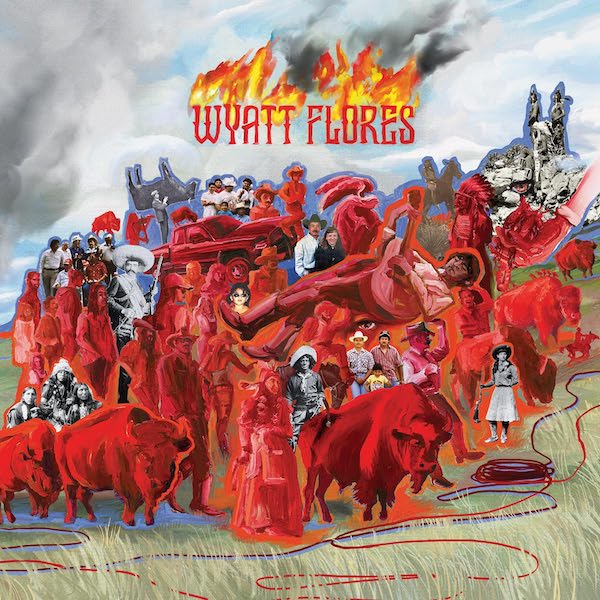
Anyway, to prevent the prison of nostalgia, I always read about and listen to the best reviewed albums of each year. Yes, I know I’m relying on the opinions of music critics that would most likely not be in my circle of friends, but that’s okay. I treat them as secondary sources that get me to the primary source and from there I draw my own conclusion and follow the path down to the source of the source. Blah, blah, blah. All I’m saying is a streaming service I will not name listed Welcome to the Plains as one of the best albums of 2024. My ears perked up. Wyatt? Flores? That sounds like a Mexican with a serious connection to country roots. Hmmm. And the album has the word “plains” in its title? The plains? The llano? The homeland of this Mexican music lover surrounded by the inheritors of settler colonialism? Inheritors who refuse to know they’re settlers or colonizers, or both? Yes, I mean me. I’m the one who’s surrounded. So yeah, I was going to have a listen.
And I was not disappointed. Not at all. From the first song to the last, it’s more than you or I could dream. Does it sometimes feel like it’s a little sentimental? Sure, but he’s 24. Seriously, 24. I don’t know that I made it a day without crying when I was 24. Hell, I’m lucky if I make it 3 days without crying now. But there’s nothing wrong with the sentimentality of it. Sentimental is okay. Feelings are okay. If I repeat that enough, maybe my Gen X brain will absorb it. Feelings are okay and they are all over this record. They are in the love he has for his hometown — Stillwater, Oklahoma, and in the love he has for small towns in general (Beaver, Oklahoma is the subject of “Little Town“). There’s also the sound of almost tears in his voice when he gets loud (“Don’t Wanna Say Good Night“) and real tears when he gets quiet (“Oh, Susannah“).
What does it mean to grow up Black, Native, or Mexican in these small plains communities? I think I hear it in these songs. It means knowing you are of this land of cotton fields, meat-packing factories, ranches and oil drilling. It means calloused hands and stray straws of hay in your hair. It means dance halls where Freddy Fender, Charley Pride, George Strait and Little Joe all share space on the playlist. It means knowing a history that is never told and trying to tell it wherever you can. I hear that in “Welcome to the Plains.” It is the world in-between where so many of us find home, even if it is a home where we are often less than welcome. We find space where we can.
In these songs, raw emotion is power — the power that stretches across the whole of the llano estacado mythic for the emptiness that we plains people know is not empty at all, but full of all that came before.
 Patricia Marie Perea